Importing portable AC units from China is high stakes.
Just one missed CE certificate, a misclassified HTS code, or a shipment delayed past peak heatwave season can destroy your entire Q3 revenue.
You could easily end up with thousands of dollars in customs penalties. Or worse: a warehouse full of dead stock.
But it doesn’t have to be that way.
Here is the deal:
If you want to control your technical risks and landed costs, you need a proven standard operating procedure. Below is your complete, factory-floor playbook for B2B buyers to ensure your cooling appliances arrive on time, fully compliant, and ready to sell.
The 7-Step Guide to Import Portable AC Units
Don’t guess. Follow this exact workflow to protect your supply chain:
1. Define Strict Requirements
Lock down your BTU/kW capacity, voltage, and refrigerant (e.g., R290). Work with a customs broker now to get your exact HTS code.
2. Shortlist Niche Manufacturers
Find factories specializing strictly in mobile ACs. Verify their export histories and target-market certifications.
3. Bench-Test Samples
Never buy in bulk blindly. Order functional units to test cooling speed, noise levels, and electrical safety on your own bench.
4. Negotiate Strategic Terms
Tie your pricing to your seasonal volume. Lock in Incoterms (FOB, DAP) and calculate all tariffs and energy levies upfront.
5. Lock in QC & Production
Put a quality control plan in writing. This must cover the final bill of materials (BOM) and third-party pre-shipment inspections.
6. Plan Freight Physics
Get accurate carton dimensions and stackability data. Plan your container loading so bottom boxes don’t crush under the dynamic weight.
7. Clear Customs Proactively
Prepare your commercial invoice, packing list, and compliance certificates weeks in advance. Pay duties and move the cargo.
Why Import Portable Cooling from China?
If you want scalable, compliant portable cooling for the EU and US markets, the supply chain starts and ends in China. Specifically, Guangdong province.
Look at the data:
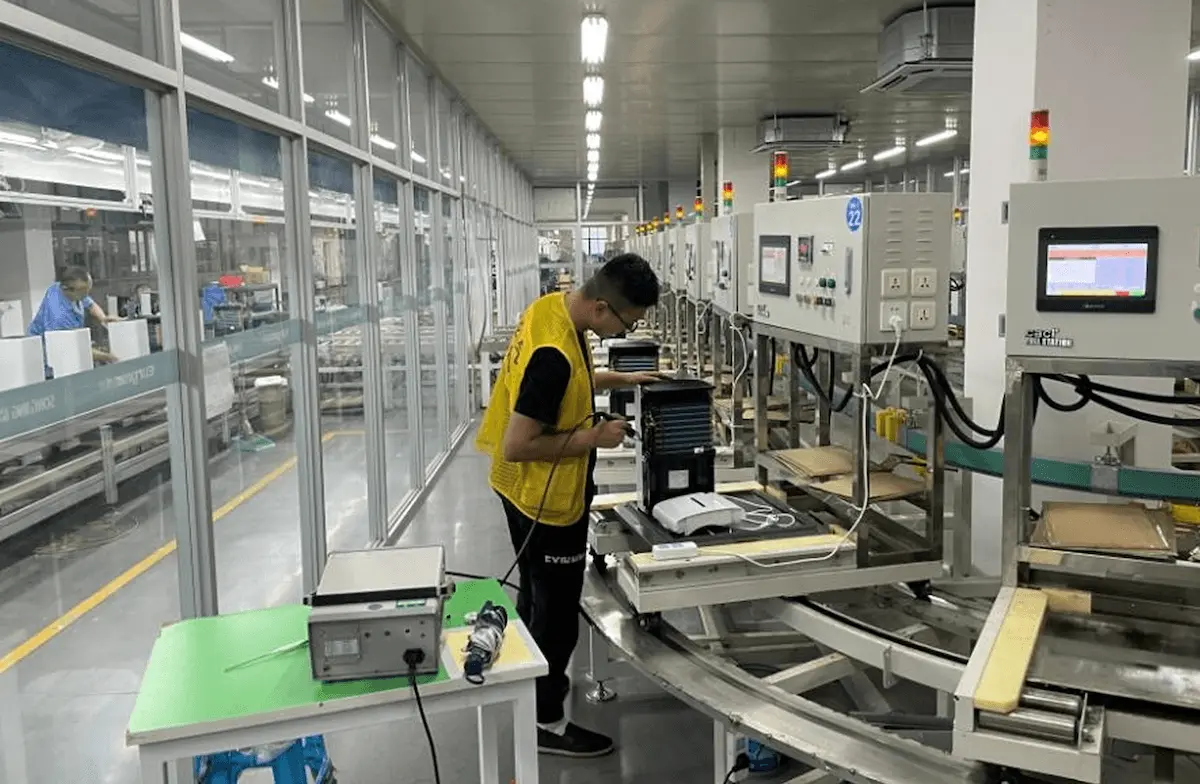
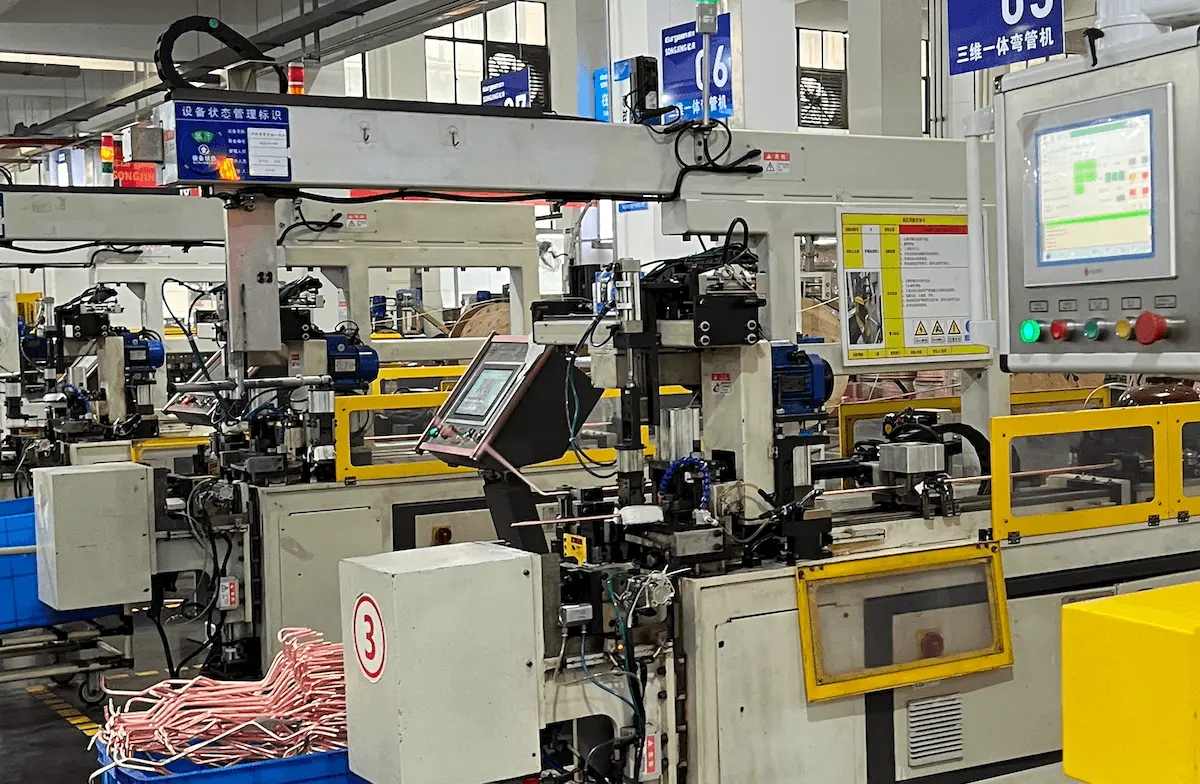
- Cities like Foshan and Zhongshan house the R&D centers, compressor plants, and assembly lines. These aren’t just assembly workshops; they feature integrated labs for performance and electrical safety testing.
- Top manufacturers leverage high automation to lower unit costs without stripping functionality. They design products from the ground up to hit CE, UKCA, FCC, and UL thresholds, rather than retrofitting compliance later.
Map Your Product Strategy to Your Target Market
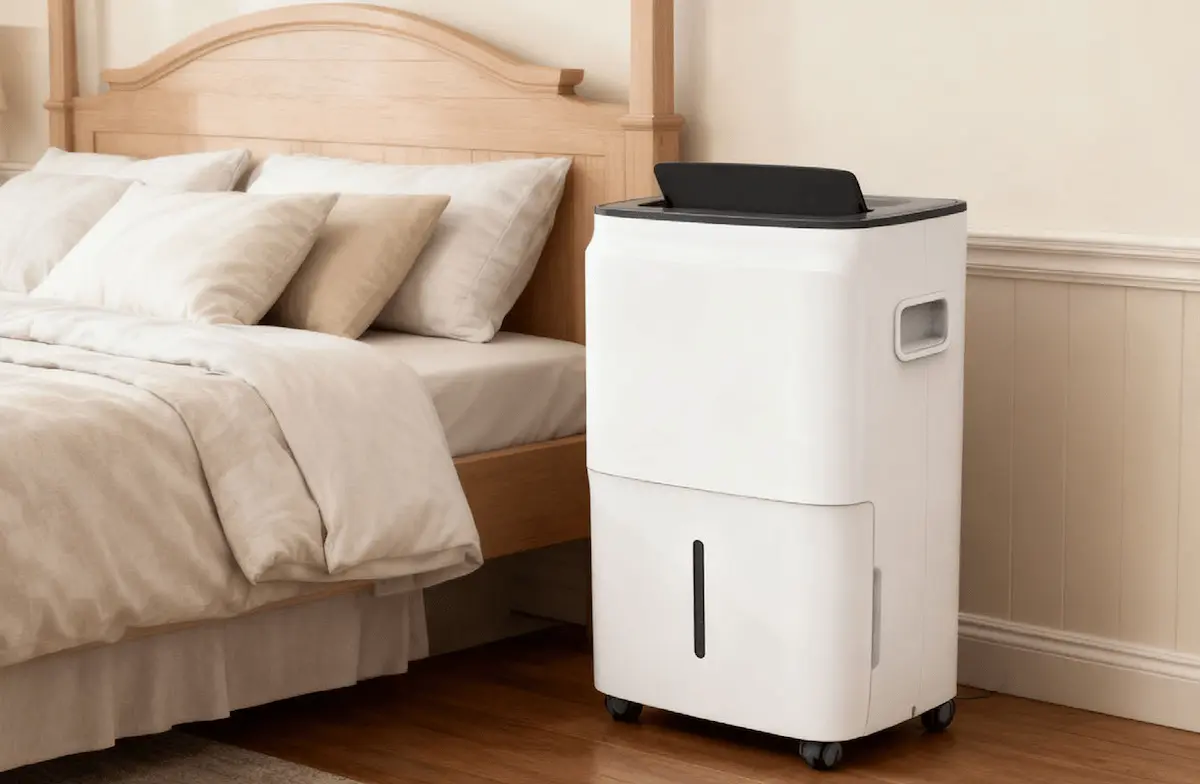
A portable AC is not a one-size-fits-all commodity. Before you send a single inquiry, define your market architecture.
In Europe, demand for plug-and-play cooling is surging due to intense heatwaves and historically low AC penetration in countries like France, Germany, and the UK. Portable split and stand-alone units win here because they require zero permanent wall penetration—perfect for rental and historic buildings.
Clarify your segment parameters early:
- USA: Focus on compliant portable room air conditioners for residential/light commercial use. Emphasize high SACC BTU ratings.
- Europe/UK: Emphasize CE/ERP compliance, high energy efficiency, low noise (dB) profiles, 230V/50Hz specs, and local plug configurations.
The Purchasing Framework: OEM vs ODM
China offers thousands of HVAC suppliers. To import successfully at scale, you need a filtering mechanism based on structure, capacity, and compliance.
OEM vs. ODM Strategy
- OEM: You provide the ground-up design, and the factory manufactures to your exact spec. High barrier to entry, maximum control.
- ODM: You customize existing, proven factory platforms (such as the widely adapted JHS-A016 chassis), modifying the UI, panel casing, and brand labeling. This drastically reduces engineering risk and time-to-market.
Factory Verification
As a deeply integrated supply chain manager and factory supplier, we never skip on-site verification. We don’t just act as middlemen; we audit the manufacturing floor.
When inspecting production lines, you must strictly verify assembly steps, environmental chamber logs, and compliance with EU/US standards. Prioritize plants that already supply your target regions and have CE, FCC, and UL documentation on hand.
Comparison and Capacity Stress-Testing
Compare multiple suppliers. Check the hidden cost drivers:
- Compressor brand (e.g., GMCC vs. generic)
- Heat exchanger material (Copper vs. Aluminum)
- Refrigerant charge volume
Crucial Step: Always verify their monthly capacity for peak season. Request QC summaries covering failure rates and any history of overheating. Top-tier mobile units must integrate automatic shutdown limits and tilt safety switches.
Technical Specifications & Compliance
Your spec decisions lock in your performance, regulatory classification, duty rates, and market acceptance. The compliance burden sits entirely on you, the importer.
United States: SACC, FCC, and Tariff Modeling
When importing to the USA, buyers lose margin when they treat ASHRAE BTU and SACC BTU as identical metrics.
- ASHRAE: A legacy lab figure.
- SACC: The DOE’s seasonally adjusted rating. It is always lower because it accounts for real-world thermal losses. Your SACC BTU must dictate your EnergyGuide labels.
U.S. customs strictly require FCC certification. UL is strongly preferred as the retail standard for safety. Furthermore, factor in tariffs: while a U.S. Customs ruling classified certain portable units under HTS 8415.82.0105 (2.2% duty), Section 301 duties apply. Model your landed costs with both.
European Union: CE, ERP, and F-Gas Phasedowns
For the EU market, technical compliance is evolving rapidly. Your roadmap must prioritize lower-GWP (Global Warming Potential) refrigerants like R290 (propane) to comply with strict F-Gas restrictions.
CE marking, ERP energy efficiency requirements, and eco-design noise rules are absolute barriers to entry. Treat CE and ERP labeling as a core part of your industrial design. Align your voltage, plug type, and refrigerants with EU norms before finalizing your BOM.
3 Questions to Ask Your Next Factory Supplier
When auditing a short-listed factory, bypass the sales pitch and ask these three technical questions:
- What exact brand and model of compressor are you specing for this unit?
- What is the precise copper pipe thickness in the heat exchanger?
- What is the tonnage of your in-house injection molding machines?
Partner With a Dedicated Factory Supplier
Purchasing portable air conditioners from China is a high-stakes process. Success ultimately comes down to mastering compliance, navigating tight logistics windows, and vetting the right manufacturing lines.
You need a team that understands HVAC manufacturing from the inside out.
As a direct factory supplier with deep OEM/ODM capabilities, we don’t just audit the paperwork, we audit the process. If you need to secure CE-compliant, high-performance portable ACs for the upcoming European heatwave season, reach out to us to lock in your production schedule today.