Managing European schools and hospitals during an intense heatwave is a logistical nightmare. Aging, historic, and protected public buildings rarely have central air conditioning. And retrofitting them with heavy HVAC systems? Usually out of the question.
Just a few weeks of severe summer temperatures can lead to unsafe classrooms and compromised recovery wards. To make matters worse, you’re up against the clock with strict EU F-gas phase-downs.
But there is a reliable way forward. Portable cooling solutions provide a fast, non-invasive way to maintain safe temperatures and guarantee F-gas compliance. If you are a distributor, importer, or procurement manager, we’ll show you exactly how to navigate the landscape of plug-and-play mobile air conditioners so you can deploy temporary cooling cost-effectively.
Why You Might Need Portable Cooling in the Public Sector
Across Europe, a large share of schools, hospitals, and civic institutions operate in heritage or architecturally protected buildings. Conventional HVAC retrofits in these locations are either heavily constrained or simply not permitted.
Conservation guidance for these buildings typically stresses minimal physical intervention. You can’t easily cut new ducts through masonry or make structural alterations to roofs. You also need to maintain minimal visual impact, meaning prominent exterior compressor banks are off the table.
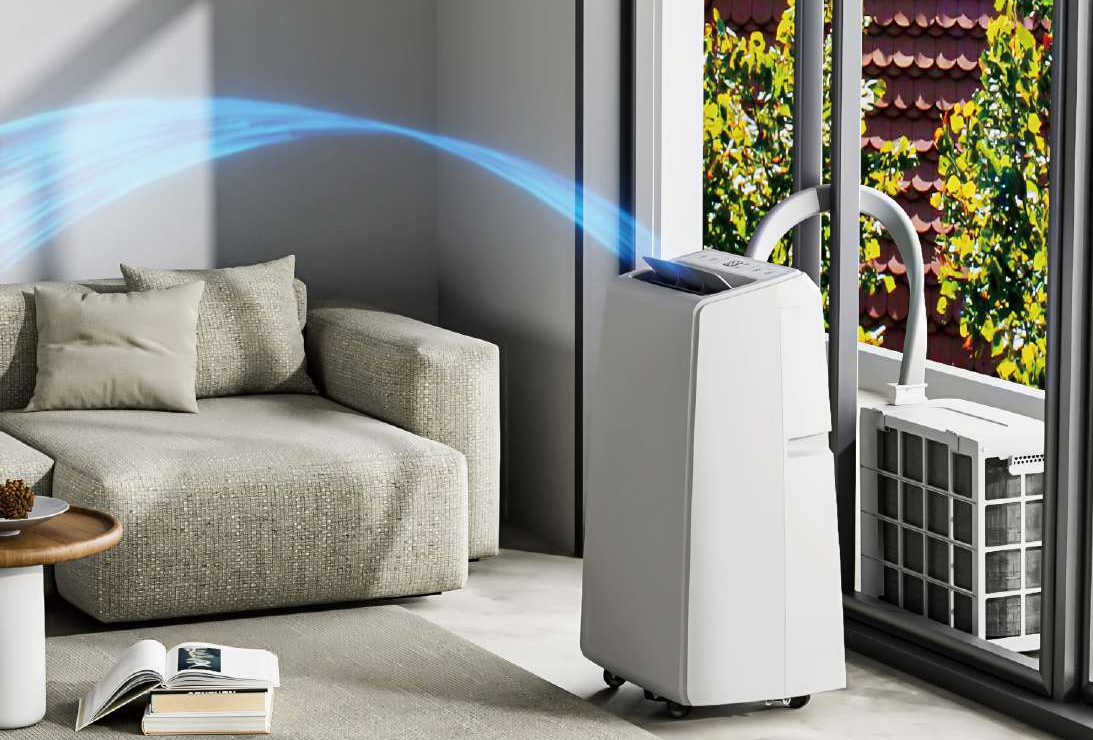
Portable cooling solutions for European schools and hospitals sidestep these barriers completely. Self-contained, plug-and-play units avoid building-integrated components entirely. They use existing openings like windows for exhaust, meaning you don’t need to worry about invasive ductwork.
Movable cooling units can be installed and removed without fixing anything to the structure. This gives your facilities teams a practical way to meet the rising thermal risks driven by heatwaves without compromising heritage obligations.
Aligning with Public Sector Budgets
Public-sector cooling decisions are rarely about technology alone. They’re deeply shaped by how your CAPEX and OPEX budgets are structured. Large, integrated HVAC projects demand significant upfront CAPEX and are often planned years in advance.
Getting approvals for these large systems involves finance, estates, heritage officers, and regulators, which significantly slows down decision-making. Portable cooling systems map cleanly onto these budget realities because they are typically low-ticket assets compared with fixed plants.
Schools and hospitals can often fund classroom portable air conditioning units straight from minor-works budgets, avoiding multi-year capital planning rounds. Because they don’t permanently alter the building, portable air conditioners usually bypass complex heritage consents, reducing administrative delays.
Rental portable cooling for schools and hospitals also provides a pure OPEX option. You can cover temporary demand during heatwaves or HVAC outages without any capital outlay.
Compliance and Regulations for Portable Cooling
For anyone supplying portable cooling solutions to the European market, the new F-Gas framework is the main barrier to entry. Regulation (EU) 2024/573 entered into force in March 2024, driving a steep phase-down of hydrofluorocarbons (HFCs).
From 2025, EU producers receive production rights equivalent to just 60% of 2011–2013 levels. This quota covers both bulk HFCs and the filling quantities in imported appliances, making traditional refrigerants increasingly scarce and expensive.
The regulation also introduces strict product-specific bans. For monoblock, plug-in units, and self-contained ACs up to 12 kW, F-gases with a GWP of 150 or higher are banned from January 1, 2027. Portable cooling based on legacy HFCs is quickly being regulated out of existence.
Why R290 is the Default Strategy
Against this backdrop, R290 (propane) has effectively become the standard refrigerant for sustainable portable cooling solutions. R290 has an ultra-low GWP of about 3 and zero ozone depletion potential.
This makes eco-friendly portable cooling inherently aligned with future F-Gas rules. If you want to secure long-term public contracts, standardizing your portfolio on R290 might be the smartest move you can make.
R290 portable air conditioners comfortably meet the post-2027 requirements for units under 12 kW. While its flammability requires careful engineering regarding charge limits, European standards are already well-established to manage these risks safely.
The Tender Prerequisites: CE, RoHS, and GS
Regulatory compliance is your entry ticket to participate in high-value tenders. Public authorities increasingly treat specific certifications as non-negotiable prerequisites before they even look at your pricing.
- CE Marking: This is mandatory for any AC placed on the EU market. It proves conformity with safety, EMC, low voltage, and Ecodesign directives.
- RoHS: This ensures restricted substances in electronic components remain below legal thresholds, aligning with broad sustainability criteria.
- GS Mark: This voluntary German safety mark is widely recognized across the EU. It signals rigorous independent testing against mechanical and electrical risks.
When you combine these certifications with R290 refrigerant, your equipment speaks directly to the procurement logic of modern public buyers. If you’re an importer, finding an OEM factory that builds these compliance standards directly into their portable ACs could help you win significantly more bids.
Comparing Portable Cooling Solutions
Different building types need different approaches to climate control. Schools and hospitals operate differently and require tailored setups to remain comfortable and compliant.
Building Need | Best-Fit Portable Format | Why it Works |
Small classrooms | Compact portable air conditioners | Easy to deploy, lower cooling demand. |
Large school halls | High-capacity portable air conditioners | Handles larger occupancy and peak heat loads. |
Exam halls | Low-noise portable air conditioners | Limits distraction during testing. |
School IT/server rooms | Spot cooling systems | Localized cooling for heat-sensitive equipment. |
Patient rooms | Quiet portable cooling | Supports comfort without excessive compressor noise. |
Wards and corridors | Movable cooling units | Quick response and flexible positioning for staff. |
Matching the Cooling Load
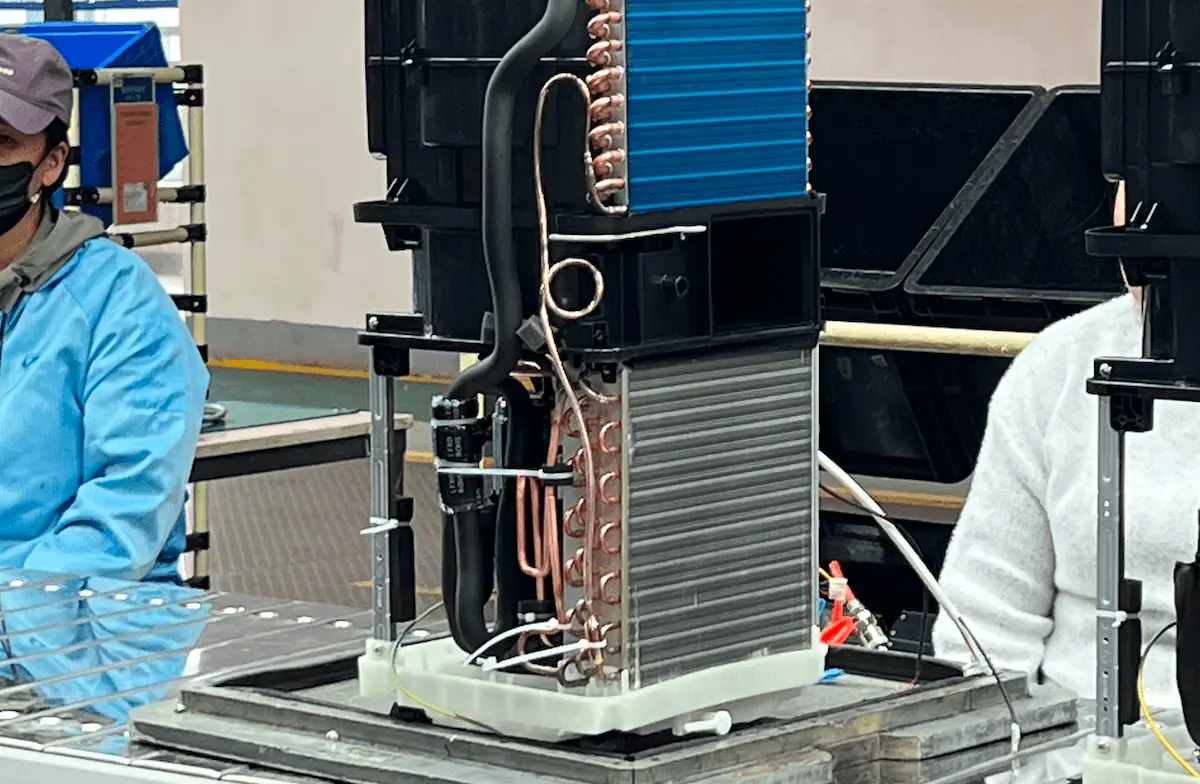
Schools are usually driven by occupant density and intermittent use. Classroom sizing must reflect people, ventilation air, and activity levels. Portable cooling works best here when you target rooms with predictable peak usage times.
Hospitals are much more complex because they run 24/7. They combine people loads with medical equipment, continuous ventilation, and specific clinical demands.
That’s why portable air conditioners for hospitals require careful room-by-room load matching rather than simple building-wide assumptions.
Managing Noise Levels in Shared Spaces
Traditional portable air conditioning often solves the heat problem but creates a new one: compressor noise. Most standard units run at 50–60 dB, which competes directly with speech in a classroom or intrudes on patient rest.
Noise is frequently the dealbreaker for European schools and hospitals evaluating portable cooling. If you can’t keep a ward quiet or a classroom intelligible, the facility simply won’t use the machine.
We recommend looking for ultra-low-noise designs. Inverter-driven compressors ramp up and down smoothly at variable speeds, holding sound levels in the high-40 dB range. This effectively turns a dominant noise source into a gentle background hum.
Meeting Hygiene and Filtration Standards
Hospitals require much stricter hygiene control than schools. Clinical spaces often rely on HEPA filtration and validated airflow to reduce airborne microorganisms and protect patients.
Poorly maintained units can actually increase microbial contamination. Combining spot cooling systems for hospital wards with HEPA filtration allows you to address heat stress and air quality simultaneously.
For classroom portable air conditioning units, filtration is more about removing fine dust and outdoor pollution. We suggest modular filtration options: HEPA for high-risk clinical areas, and standard filtration for general teaching and office spaces.
Key Features to Look For in Portable Cooling
Plug-and-Play Deployment
For many campuses and hospital estates, the biggest bottleneck is disruption. You can’t easily shut down a ward or an exam hall to open ceilings and install new ductwork.
Modern portable spot-cooling units are designed to be rolled in, vented through a window or ceiling tile, and powered from a standard circuit. You get targeted cooling without ever touching the main HVAC system.
This operational advantage is straightforward. You avoid building works, planning approvals, and asbestos surveys. You can deploy units rapidly during a heatwave and easily roll them into storage when base-building works are complete.
IoT and Smart App Control
Once a site moves from a single temporary unit to dozens across a campus, operational overhead becomes a real pain point. You want to avoid sending maintenance staff to physically adjust every single unit.
Market-leading, energy-efficient portable air conditioners pair quiet hardware with smart control features. App-based interfaces allow staff to change setpoints and schedules remotely from their phones.
Integration with building automation lets facility teams group units into zones. You could seamlessly pre-cool exam halls ahead of occupancy and ramp them down automatically later to protect energy budgets.
Why OEM/ODM Factory Support Matters
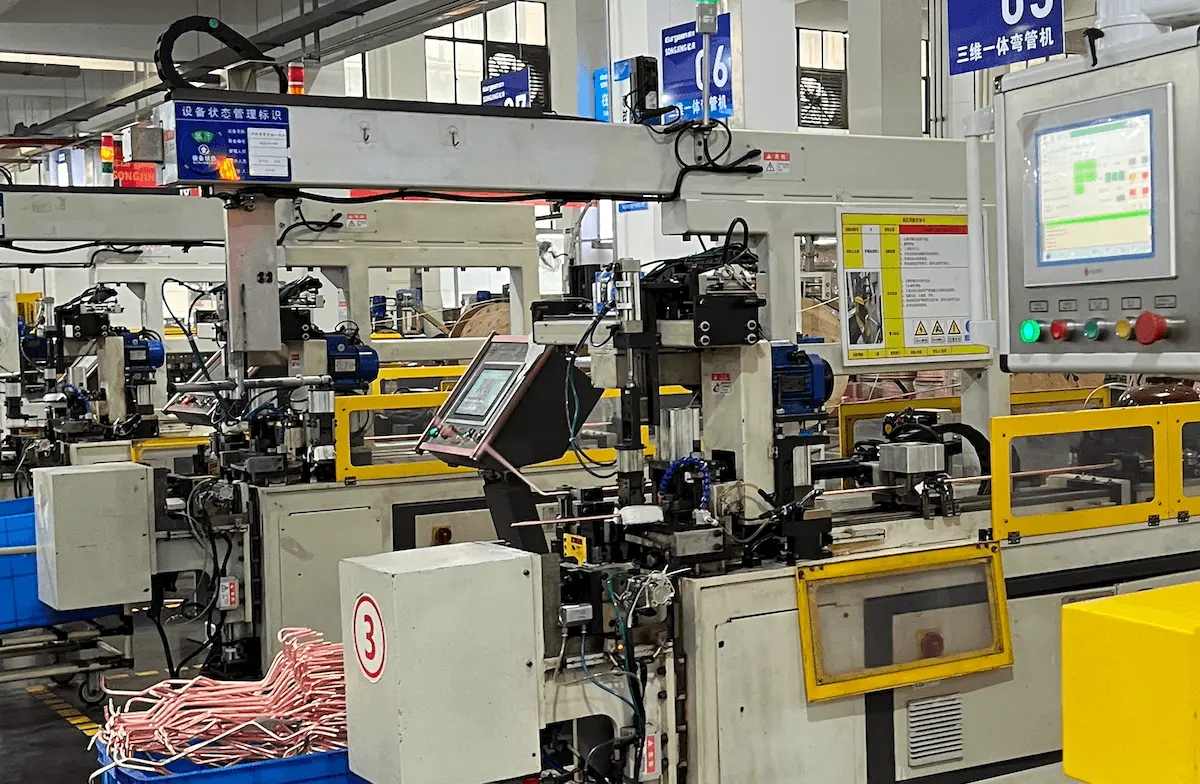
Selecting portable cooling solutions for European markets is a strategic, long-term decision. You need a manufacturing partner who will consistently underpin your product roadmap and ensure ongoing regulatory compliance.
Comparing data sheets will tell you capacity and noise, but it won’t tell you if the factory can keep you stocked across multiple demanding summers. European portable air conditioners are governed by strict Ecodesign minimum efficiency levels.
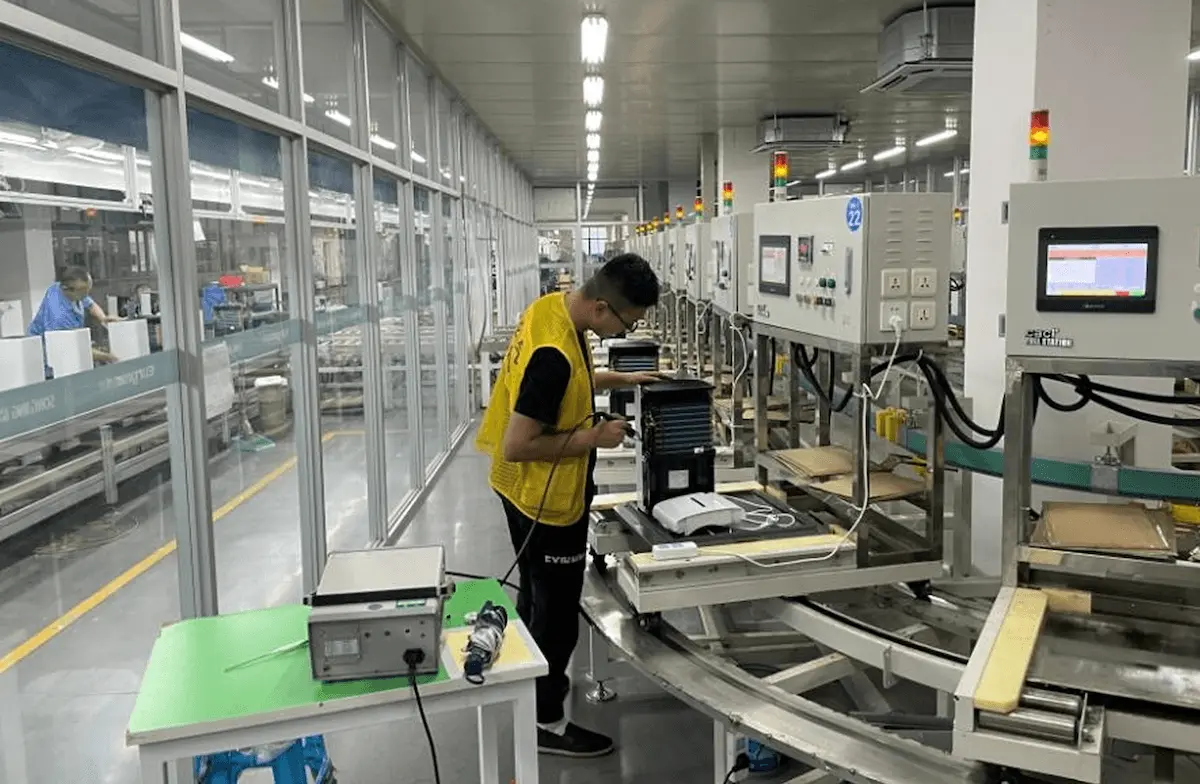
Every unit must be engineered from the ground up for EU performance, not retrofitted at the last minute. An OEM/ODM partner that integrates R&D, tooling, and compliance effectively becomes your extended technical department.
We design plug-and-play portable air conditioning to pass CE and energy labeling requirements on the first attempt, saving you months of administrative back-and-forth.
True Customization Beyond the Spec Sheet
In the B2B institutional segment, most tenders start with similar baseline requirements. Without real customization, every offer looks interchangeable, and price becomes your only lever.
Deep ODM capability lets you co-design platforms for specific use cases. You might consider 3-in-1 multifunction platforms that offer cooling, dehumidification, and fan-only modes in one housing, allowing schools to use the same unit for peak summer cooling and shoulder-season ventilation.
We also offer private molding and industrial design. You can create custom housings that fit tight corridors or high-capacity units for large school halls. This level of customization allows you to compete on fit-for-purpose design rather than just a headline BTU number.
Meeting Seasonal Demand Reliably
Cooling demand in Europe is sharply seasonal and driven by short, intense heatwaves. When temperatures jump, you have a very narrow window to deliver temporary cooling solutions to your clients.
An OEM factory that treats Europe as a core market plans capacity and logistics around this exact reality. We tie our production planning to summer forecasts to ensure critical components are scaled ahead of expected demand.
We also build spare-parts strategies into our long-term support. Keeping compressors, control boards, and filters available ensures your fleets stay operational across multiple seasons.
Conclusion
Choosing portable cooling solutions is no longer just a facilities update. It’s a critical supply-chain decision. With progressive bans on high-GWP F-gases hitting between 2025 and 2035, equipment relying on outdated refrigerants will soon become a massive regulatory liability.
Aligning your portfolio with R290-based, low-GWP plug-and-play systems might be the smartest move you can make right now. Here is exactly how this approach hardens your cooling supply chain:
- Safeguards your rental and long-term ownership options against upcoming service bans on high-GWP refrigerants.
- Directly aligns with eco-friendly, climate-neutral procurement policies that public institutions now demand.
- Guarantees your spot cooling systems are ready to deploy when seasonal heatwaves push demand beyond existing HVAC capacity.
For facilities managers and procurement teams, the takeaway is simple:
Don’t wait for the next heatwave or regulatory deadline to bite. Technical data sheets, bulk R290 procurement, and customized compliance engineering are your best tools for managing climate control risk.
If you’re ready to secure your factory partner before the summer peak, reaching out to our OEM team for R290 technical data sheets and customized compliance solutions could be a great next step.