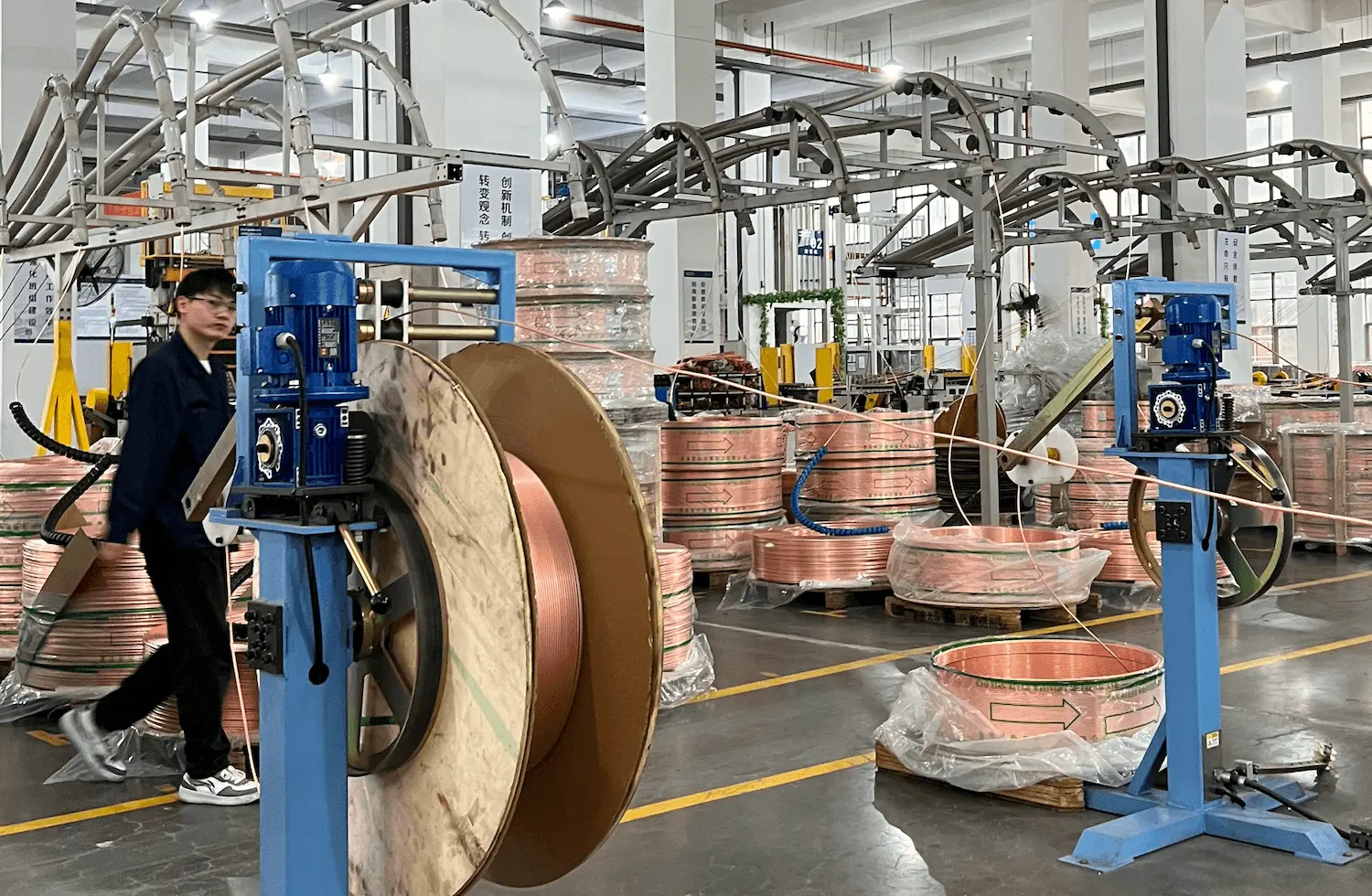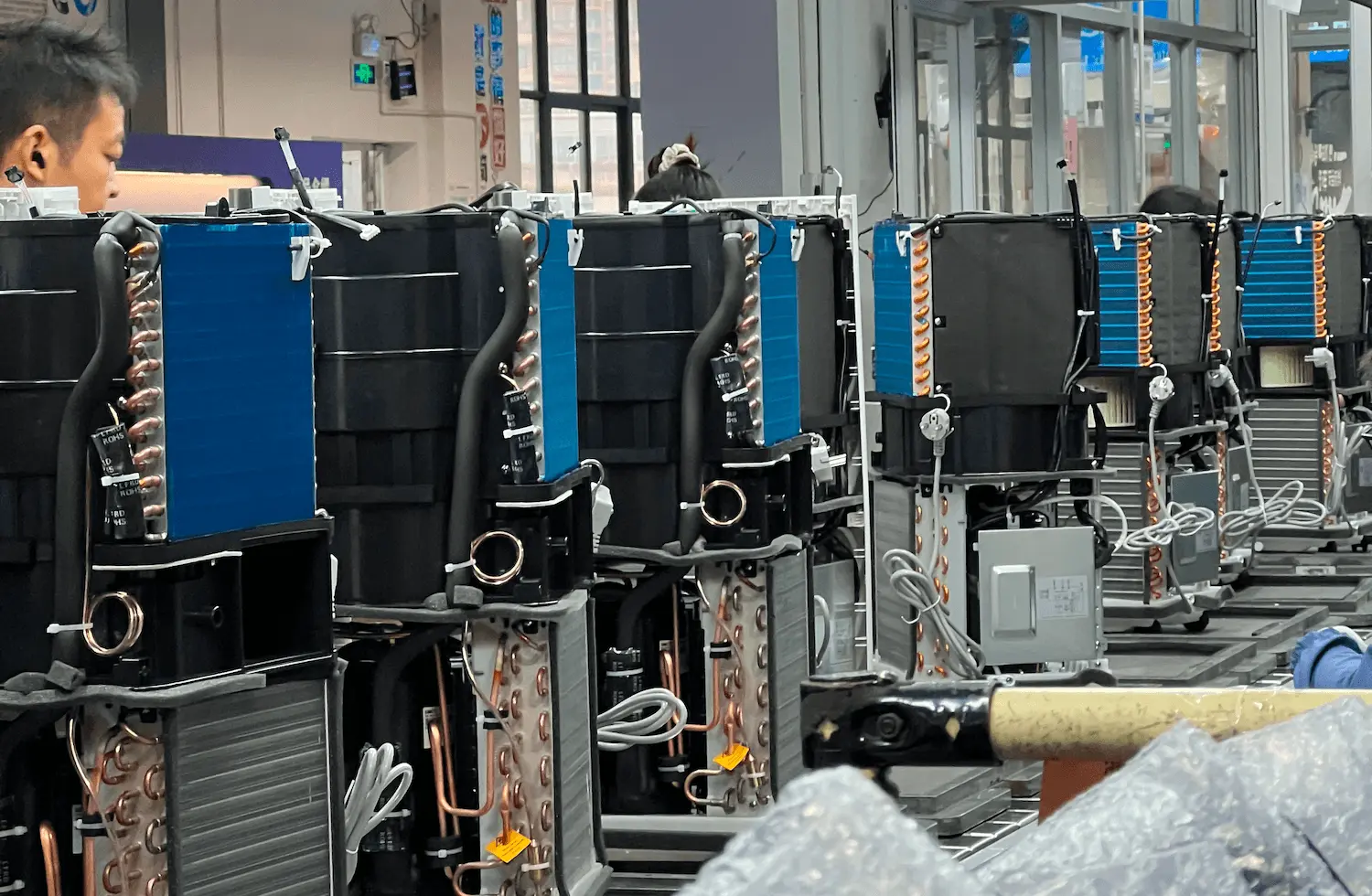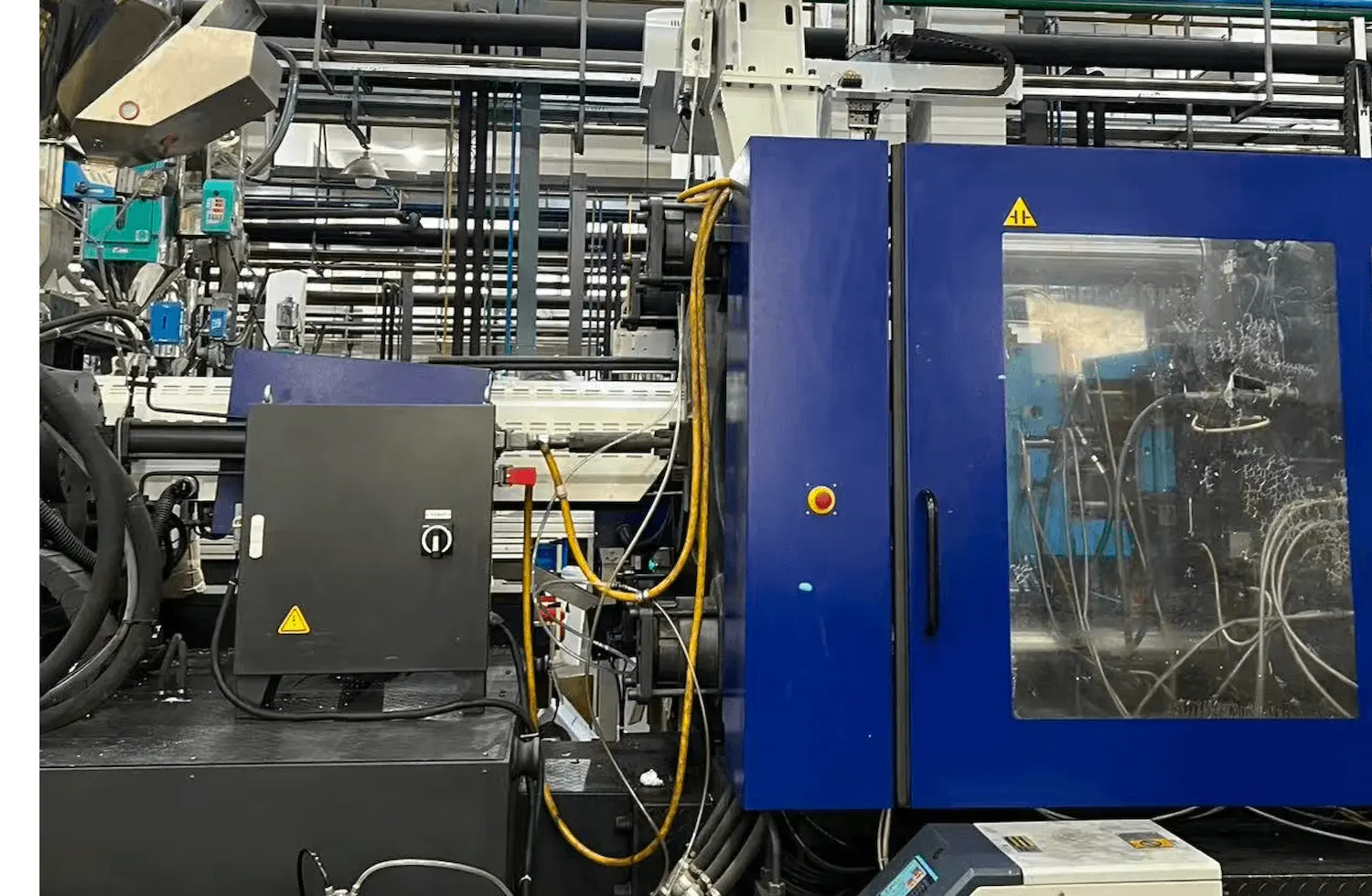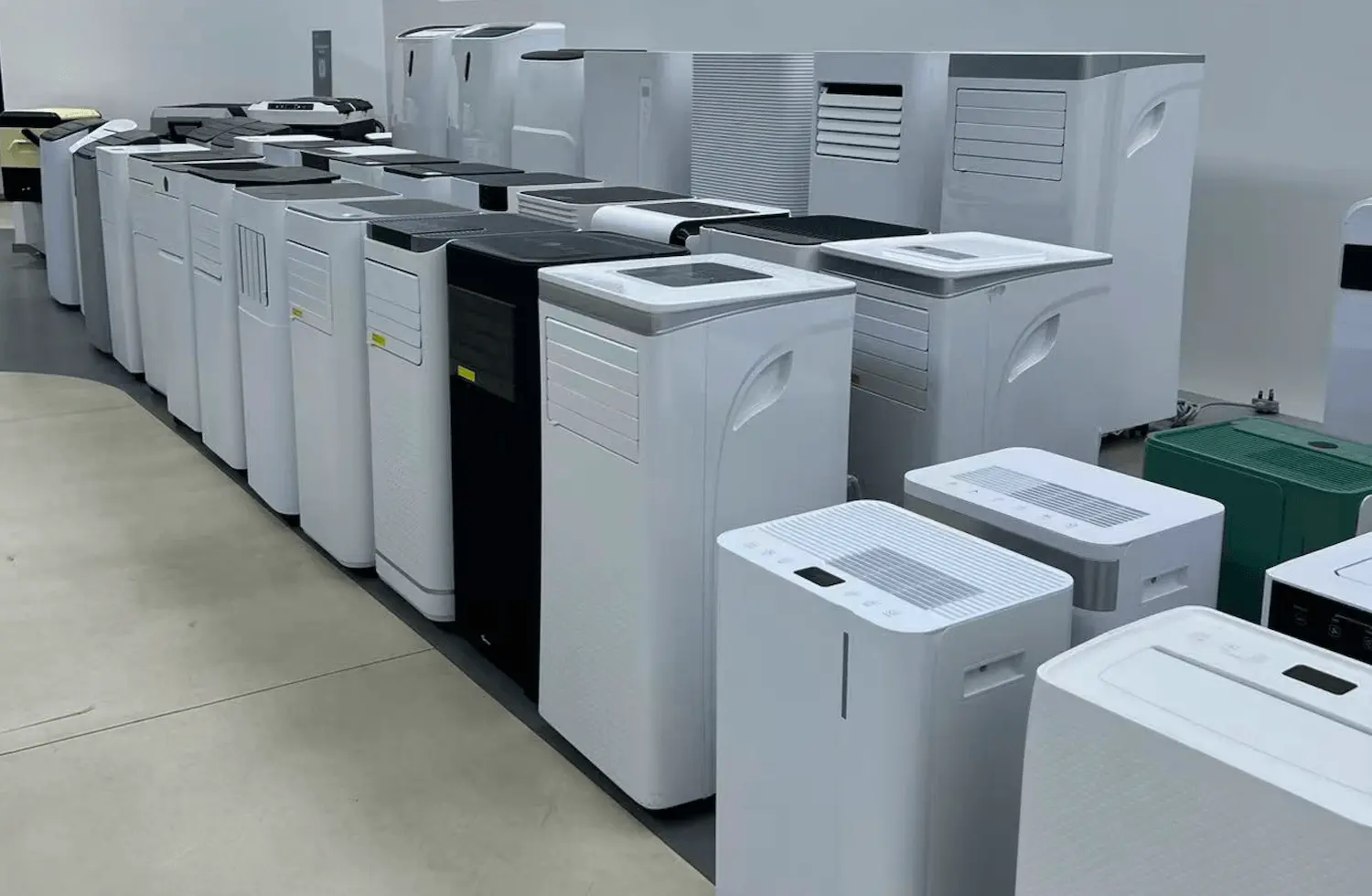
Custom OEM & ODM Solutions
Certified Global Compliance
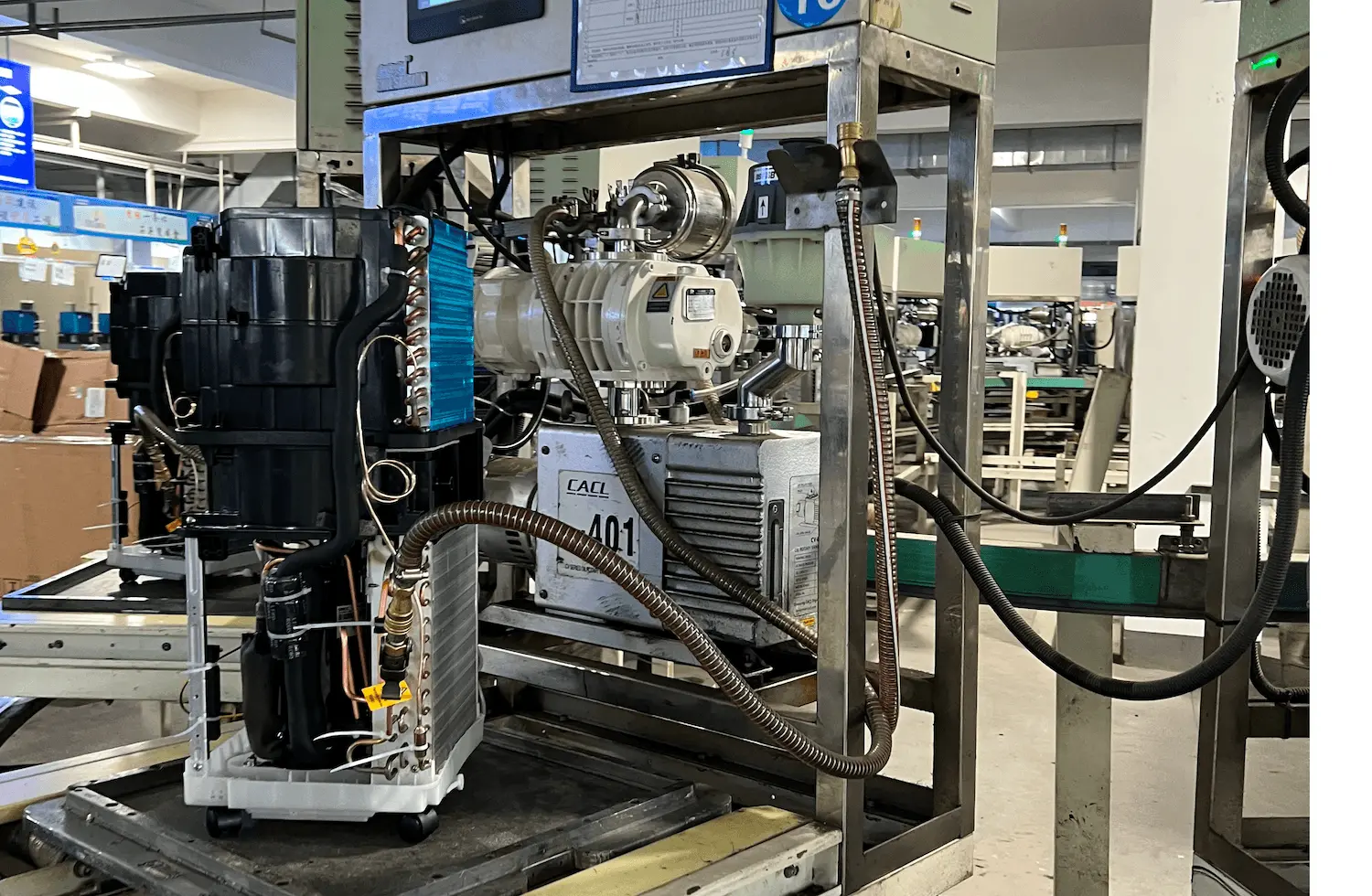
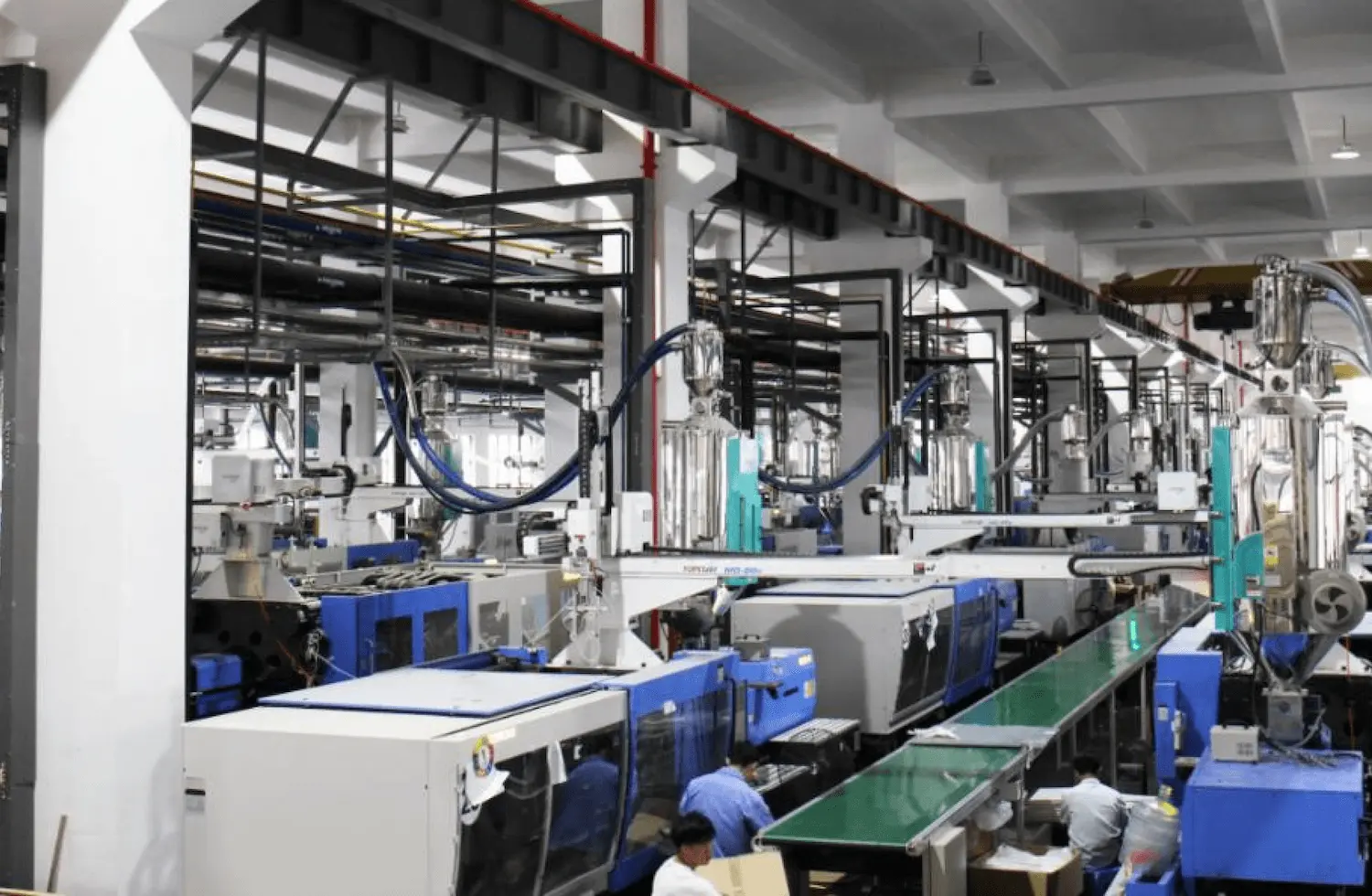
High-Volume Daily Output
Export-Ready Global Logistics
- Home
- Portable Split Air Conditioners
Portable Split Air Conditioners
A portable split air conditioner is a two-part, movable air-conditioning system. It combines a quiet indoor air handler with a separate outdoor compressor, linked by a flat, pre-charged refrigerant hose.
Unlike permanent ductless mini-splits, this system requires no wall drilling and no licensed F-gas technician. It offers your customers the high efficiency and silent operation of a fixed system, in a flexible, renter-friendly format. Check below to explore our products.
DC Inverter Portable Split Air Conditioner
- SEER 5.6/SCOP 4.0
- 4 in 1 Cooling, Heating ,Fan and Dehumidifying
- Low Noise Level 39 dB(A)
Portable Split Air Conditioner with Heating
- With cooling and heating capacity
- Attachable front panel with LED display
- Remote Control
Compact Portabe Split Air Conditioner
- Compact and handy, can be placed on desktop
- Energy-efficient
- Noise level as low as 40dB







Get free expert advice on your cooling solutions
Portable Split vs. Other Air Conditioning Systems
Here is a quick comparison to help you understand how this product fits into the room-cooling market.
Feature | Portable Split AC | Traditional Portable AC | Fixed Mini-Split |
Installation | Tool-free, plug-and-play | Tool-free, roll-in | Permanent, requires technician |
Noise Level | Low (Compressor is outside) | High (Compressor is inside) | Very Low |
Cooling Efficiency | High (No negative pressure) | Low (Exhausts room air outside) | Very High (SEER 20+) |
Target Audience | Renters, heritage buildings, RVs | Emergency spot cooling | Homeowners, long-term HVAC |
Across the landscape of cooling solutions, the portable split occupies a highly practical middle ground. It offers a clear upgrade in comfort over a monobloc unit, without the heavy upfront costs and installation barriers of a fixed mini-split.
Main Components of a Portable Split Air Conditioner
The Indoor Unit
This is a compact, floor-standing cabinet on castors that contains the evaporator coil, blower fan, and electronics. Because the noisy compressor is external, this unit functions primarily as a quiet air handler. This makes it an excellent choice for noise-sensitive areas like bedrooms and home offices.
The Outdoor Unit
The outdoor module houses the high-energy, heat-generating components, including the compressor, condenser coil, and fan. Shifting these parts outside keeps waste heat and mechanical vibration completely out of your customer’s living space.
The Flat Connection Hose
We link the two units with a rigid or semi-rigid pass-through hose, typically around 2.7 cm thick. It carries the sealed supply and return refrigerant lines, electrical power, and condensate drainage. Its flat profile allows standard windows to close almost completely, which helps stop hot outdoor drafts from entering the room.
Auto-Evaporation System
We design these units so that any condensate collected indoors is pumped directly through the connection hose to the outdoor unit. Once there, the hot condenser coil flashes the water into vapor. This eliminates the daily chore of emptying water tanks for your end-users.
Sealed System Design and User Handling
We build these as completely sealed, factory-charged systems. The refrigerant circuit is closed and is not intended to be opened by the end user.
Because the connection hose is pre-assembled, your customers never handle raw refrigerant. If they want to relocate the unit to another room, they simply move the indoor and outdoor modules together as a single pair. This preserves the system’s performance and ensures a safe, DIY installation.
Mounting Brackets and Outdoor Positioning
Since the outdoor unit must sit outside, portable split systems rely on non-permanent support hardware. Users typically place the unit on a balcony terrace, an external ledge, or securely rest it on a window sill.
We include dedicated no-drill mounting brackets in most of our product kits. These brackets allow users to safely suspend the outdoor unit from a window opening without permanent drilling, ensuring they comply with multi-tenant apartment rules.
Key Features and Technical Specifications
Cooling Capacity (BTU and kW)
Our platforms are available in capacities ranging from 5,000 BTU (1.5 kW) for compact RVs, all the way up to 12,000 BTU (3.5 kW), which can comfortably cool living rooms around 25–40 m².
High SEER/COP Ratings
High Seasonal Energy Efficiency Ratios (SEER up to 6.1) help our units secure A++ energy class ratings. Additionally, strong COP ratings mean the reverse-cycle heating mode can double as an energy-efficient winter space heater.
Eco-Friendly Refrigerants
We use R290 (propane) in our systems. R290 offers an ultra-low Global Warming Potential (GWP) and zero ozone depletion. Choosing this eco-friendly refrigerant ensures your inventory remains compliant with strict European F-Gas policies for the long term. CE marking and RoHS certifications come standard on all our units.
4-in-1 Operating Modes
A modern portable split heat pump rarely just cools. We design them as 4-in-1 climate solutions to give your customers year-round value:
- Cooling mode: Delivers standard, high-efficiency refrigeration for the summer months.
- Heating mode: Reverses the cycle to provide space heating during the cooler shoulder seasons.
- Dehumidification: Removes excess moisture without dropping the room temperature too much, which is highly beneficial for coastal areas.
- Fan-only mode: Circulates indoor air to keep rooms feeling fresh.
Noise Levels and Acoustic Performance
Because the heavy-duty compressor sits outside, the indoor unit’s sound comes almost entirely from the blower fan. Typical indoor sound pressure for a well-built mobile split sits around 39–45 dB(A) at low speeds.
The outdoor unit will register around 55–60 dB(A). However, because that noise stays entirely outside the building envelope, the user enjoys a quiet environment for sleeping or working.
Advantages and Limitations
Advantages of Portable Splits
- Higher efficiency than monoblocs because they avoid recirculated heat and negative pressure.
- Lower indoor noise by relocating the compressor outdoors.
- Year-round usability with heat pump modes, offering better COP ratings than electric heaters.
- Renter-friendly mobility with no permanent wall penetration required.
- Tool-free, DIY installation using pre-engineered quick connections.
Limitations and Trade-Offs
- Higher purchase price compared to basic single-hose portables.
- Requires a structurally sound balcony or window sill to safely secure the outdoor unit.
- Moving two connected modules is bulkier than rolling a single-box AC.
- Hose length constraints limit how far you can place the indoor unit from the window.
Typical Applications for Portable Split ACs
RVs, Vanlife, and Mobile Homes
These units are highly popular for mobile living. They deliver true room-scale cooling without forcing owners to cut massive holes into their vehicle’s shell. Users get quiet nights and can easily pack away the indoor unit while driving.
Historic Buildings
Many listed heritage properties strictly ban external condenser brackets on the facade. A portable split air conditioner acts as a legal workaround, allowing users to run lines through a reversible window opening without any drilling.
Home Offices and Bedrooms
The drastically lower indoor noise level is critical for anyone doing video calls or trying to sleep. Furthermore, the heating function takes the edge off cold mornings, which might save users from turning on their entire home’s boiler system
Garden Rooms and Temporary Events
Pop-up retail kiosks, holiday homes, and detached garden studios frequently lack central HVAC. A wheeled, self-contained split system provides rapid, zone-based climate control that you can easily disconnect and store away during the off-season.
OEM/ ODM Customization Options for B2B Buyers
We are fully dedicated to helping distributors and brands build a competitive edge in the portable HVAC market.
Brand Customization (OEM)
We can customize the exterior to perfectly match your brand identity. Our factory offers high-quality logo silk-screening, custom Pantone color matching for the chassis, and fully branded retail packaging.
Voltage and Plug Standards
We adapt our manufacturing platforms to meet your specific destination market’s electrical standards. We configure units for 110-120V or 220-240V, complete with EU, UK, US, or AU plug types right out of the box.
Smart Features Integration (ODM)
If you want to offer App-controlled smart portable ACs, we can easily integrate Wi-Fi modules into your order. This enables your customers to use modern features like remote scheduling, energy monitoring, and voice assistant compatibility.
Warranty and After-Sales Support
Our standard B2B framework includes a 1-year comprehensive warranty. To support your local technicians and reduce downtime, we include approximately 0.5% free spare parts (such as PCBs, sensors, and fan motors) with all full container orders.
Minimum Order Quantities (MOQ) and Lead Times
MOQs for standard ODM platforms often start at just a few hundred units. For fully customized projects, we recommend aligning your order with 40HQ container loads to ensure cost-efficient logistics. Standard manufacturing lead times run 30–45 days after you confirm the final artwork.
Ready to expand your product catalog? Contact our B2B sales team today for custom OEM quotes and wholesale pricing.
Frequently Asked Questions
No. The refrigerant lines are factory-sealed and pre-charged. End-users simply place the indoor unit, secure the outdoor unit on a bracket, and plug it into a standard wall outlet.
Yes, we include a no-drill bracket for the outdoor unit if required. These allow users to safely suspend the outdoor unit from a window opening or balcony ledge without permanent drilling, complying with multi-tenant apartment rules.
They manage high moisture loads through continuous drainage and integrated auto-evaporation. In extremely humid coastal areas, keeping the unit perfectly level ensures the condensate pump clears water efficiently to the outdoor unit.
Yes, provided the unit is securely supported according to the manual. The balcony or ledge must support the hardware's weight, resist vibration, and maintain adequate clearance for proper airflow.
The lead time for a wholesale container order is 30 to 45 days for standard OEM branding. For heavily customized units or peak season orders, lead times can extend to 45 to 60 days.
Why you can trust us
As a leading manufacturer of environmental cooling solutions, we provide global brands and distributors with innovative portable air conditioners. Driven by end-to-end in-house R&D, design, and mass production, we guarantee certified global compliance, high-volume manufacturing excellence, custom OEM/ODM solutions, and industry-leading cooling efficiency.
Our global partners